Appearance
Economic Forensics
Definition
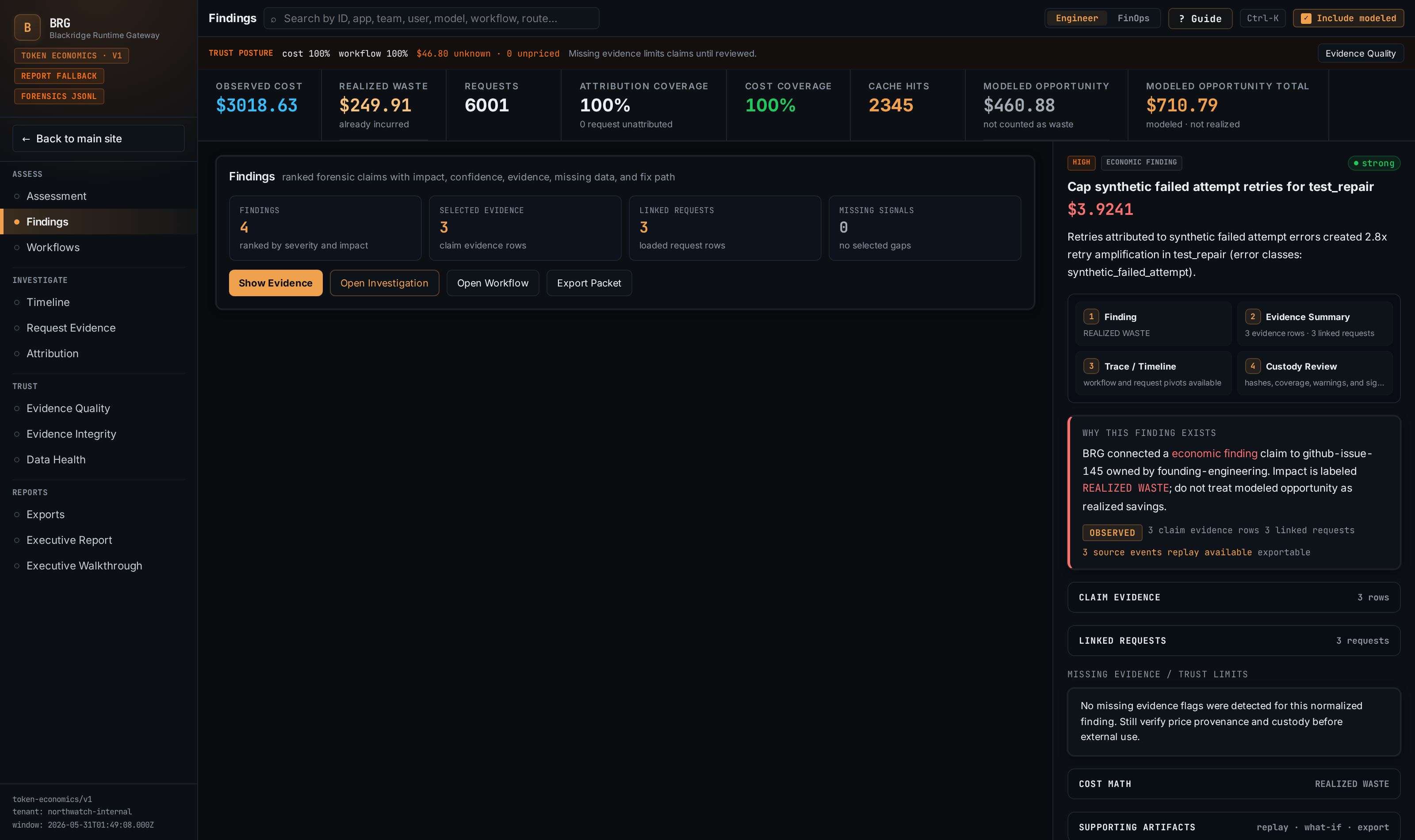
Economic forensics is reconstructing AI spend behavior from evidence: what happened, why it cost money, which work was waste, and which fix should come first.
Why It Matters
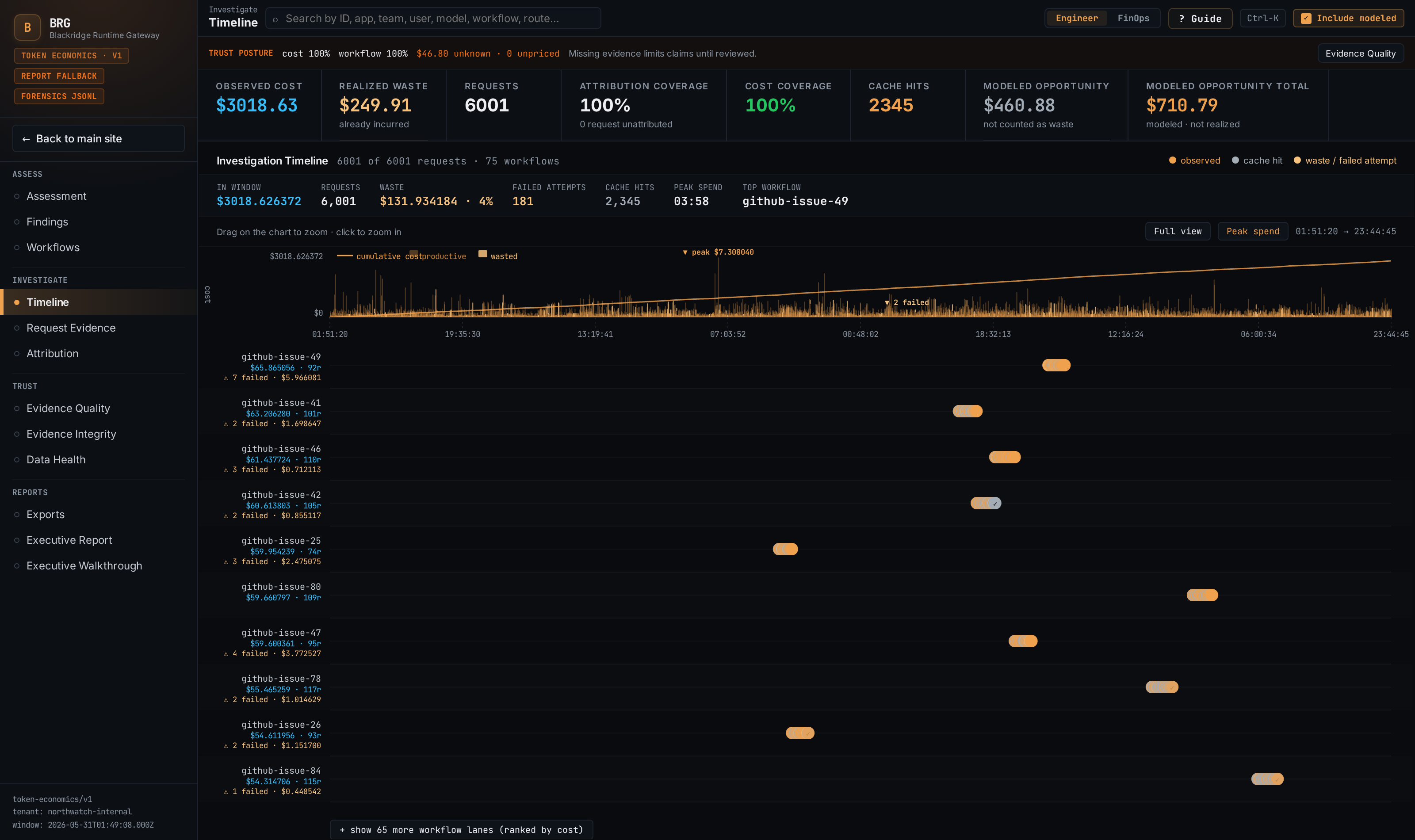
Agentic systems create indirect spend. A single user-visible answer may involve planner calls, researcher calls, retries, fallback attempts, duplicate retrieval work, and reviewer calls.
How Blackridge Represents It
Blackridge combines:
- Request-level EconomicsEvents.
- Workflow lineage and trace fields.
- Attempt and fallback metadata.
- Cache verdicts and fingerprints.
- Cost and pricing provenance.
- Report recommendations with evidence details.
RequestModel trafficUsage, timing, route, errors, cache, and IDs.
AttributionOwner resolutionTeam, app, service, user, and provenance per field.
LineageWorkflow graphRetries, fallbacks, branches, and contribution markers.
EconomicsCost derivationObserved usage, pricing snapshot, unknown coverage.
FindingAuditable claimImpact, basis, evidence grade, and reproducibility hash.
Example Investigation
A first pass selects an evidence window in the investigation surface and reviews the executive summary, waste breakdown, retry and fallback economics, workflow lineage, and recommended actions. The investigation API serves those assessment fields to the UI and export surfaces so Finance and Engineering inspect the same evidence-backed view.
Common Mistakes
- Looking only at top-line cost.
- Ignoring failed and denied events.
- Assuming Blackridge can infer lineage without parent/root IDs, trace IDs, or workflow IDs.
Related Docs
- Glossary
- Event Schema
- Report Fields